Christopher Walken performs the poetry of Lady Gaga.
Wednesday, November 4, 2009

Seeing Great Things
 I've spent a significant portion of my publishing career in the Flatiron Building, first at St. Martin's Press and now at Bloomsbury. As many readers will have noticed the Bloomsbury Press logo alludes to the shape of the Flatiron. The FIB, as internal e-mails sometimes call it, is somewhat more wonderful to look at than to work in--it was built in 1902 and still has the same plumbing and heating--but it makes me happy every day to walk in the door of a New York landmark with so much character.
 The Flatiron's unique appearance makes it one of the most photographed structures in New York and probably the world. The first of the photos above, by Edward Steichen, has been reproduced so often it is now a cliche'--but it's still lovely. I like the Steiglitz image below it, in which the photographer has found a tree that perfectly matches the shape of the building. But just yesterday, my colleague Pete Beatty discovered an equally wonderful picture online that reminds us why, according to urban lore, the intersection of Broadway and 23rd Street gave rise to the expression "23-Skidoo": this was where the cops had to shoo away fellows who would ogle the ladies.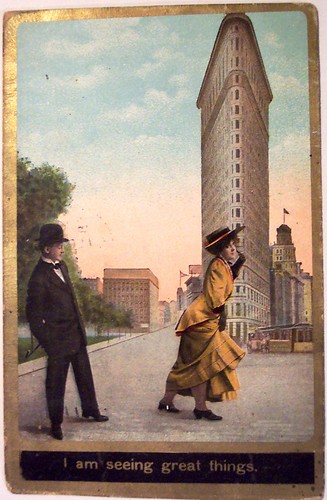
P.S. Thanks to reader Tinker Greene who pointed out that the original version of this post I reversed the names of Steichen and Steiglitz. Even editors need editors.
Tuesday, November 3, 2009
How to Do a Hook Slide, and Other Improbable Things I've Learned from Books

But when tryouts started, I was the only kid who knew how to do a hook slide. (Alas, this skill would have been much more useful if I had ever got on base. Hook sliding into first is rarely effective.)
I still have the habit. I am a sucker for instructional books, on anything from sports to XML coding. (OK, I haven't tried that one yet. But the day may be coming.) But here, off the top of my head, are just a few of the things I have learned from books since my Little League days.
How to putt. (In truth, I learned this from my wife. But she didn't teach me, as the little volume in the pro shop did, How To Putt in Two. Results not guaranteed.)
How to make a Sazerac cocktail (puh-leez, not with bourbon)
How to manage files in Mac OS X (and many other Mac things--thank you, David Pogue.)
How to paint watercolors (I actually took a class on this but could never master laying a wash until I practiced with the instructions right next to me.)
How to blog. Actually I'm lying. I bought a book on this but then I lost it and I finally realized the six months I spent "looking for it" were really just an excuse not to sit down and do it. Maybe this blog would be better if I had found it, but at least it's getting written.
Probably the coolest instructional book I've ever read was The Great International Paper Airplane book. Not only did it show you how to make scores of different paper airplanes, but it showed how to make an awesome rocket from a paper match, tinfoil and a paper clip. You haven't lived until you've launched one of these.
I still have a great fondness for books of practical advice and I find it very satisfying to edit them, as I occasionally do. A forthcoming one by Chris Farrell of public radio's Marketplace Money seems well suited to the present moment: The New Frugality: How to Consume Less, Save More, and Live Better. Is there a practical book that has made a difference in your life? I'd be glad to have a list from readers of this page--just post a comment below.
Monday, November 2, 2009
Which Section of the New York Times D'You Read?
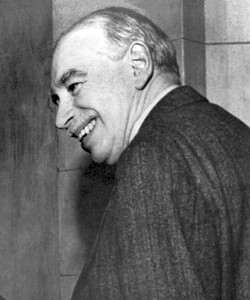
The Times reviewed Keynes twice in the same issue--once in the Book Review, once in the Business section. For a publisher, this is like getting the Daily Double on Jeopardy--at least when they're two good reviews. These were very favorable, but as sometimes happens the two reviewers seem to have read two different books. Devin Leonard calls Clarke's "the liveliest" of three new works on Keynes, and says his prose "sparkles." But Leonard thinks Clarke's "gossipy" account of Keynes's life is "the place to begin if you want to understand the economist’s personality and charisma." He thinks other authors are stronger at explaining the economic ideas that helped pull Britain and (even more so) America out of the Great Depression.
Over in the Book Review, Justin Fox thinks Keynes's life is too interesting for Clarke to do it justice! He says, by contrast, Keynes "takes off" only when it gets to the economist's work. "Clarke lays out the development of Keynes’s economics from the mid-1920s to his General Theory, and it’s a gripping journey," says Fox.
I'd have been happy with either one of these reviews. Together they go to show once again that much of any book review is in the eye of the beholder. And I hope they suggest that whether you're interested in Keynes's life or his ideas, Keynes is a little book with a lot to offer.
Subscribe to:
Posts (Atom)