 I've spent a significant portion of my publishing career in the Flatiron Building, first at St. Martin's Press and now at Bloomsbury. As many readers will have noticed the Bloomsbury Press logo alludes to the shape of the Flatiron. The FIB, as internal e-mails sometimes call it, is somewhat more wonderful to look at than to work in--it was built in 1902 and still has the same plumbing and heating--but it makes me happy every day to walk in the door of a New York landmark with so much character.
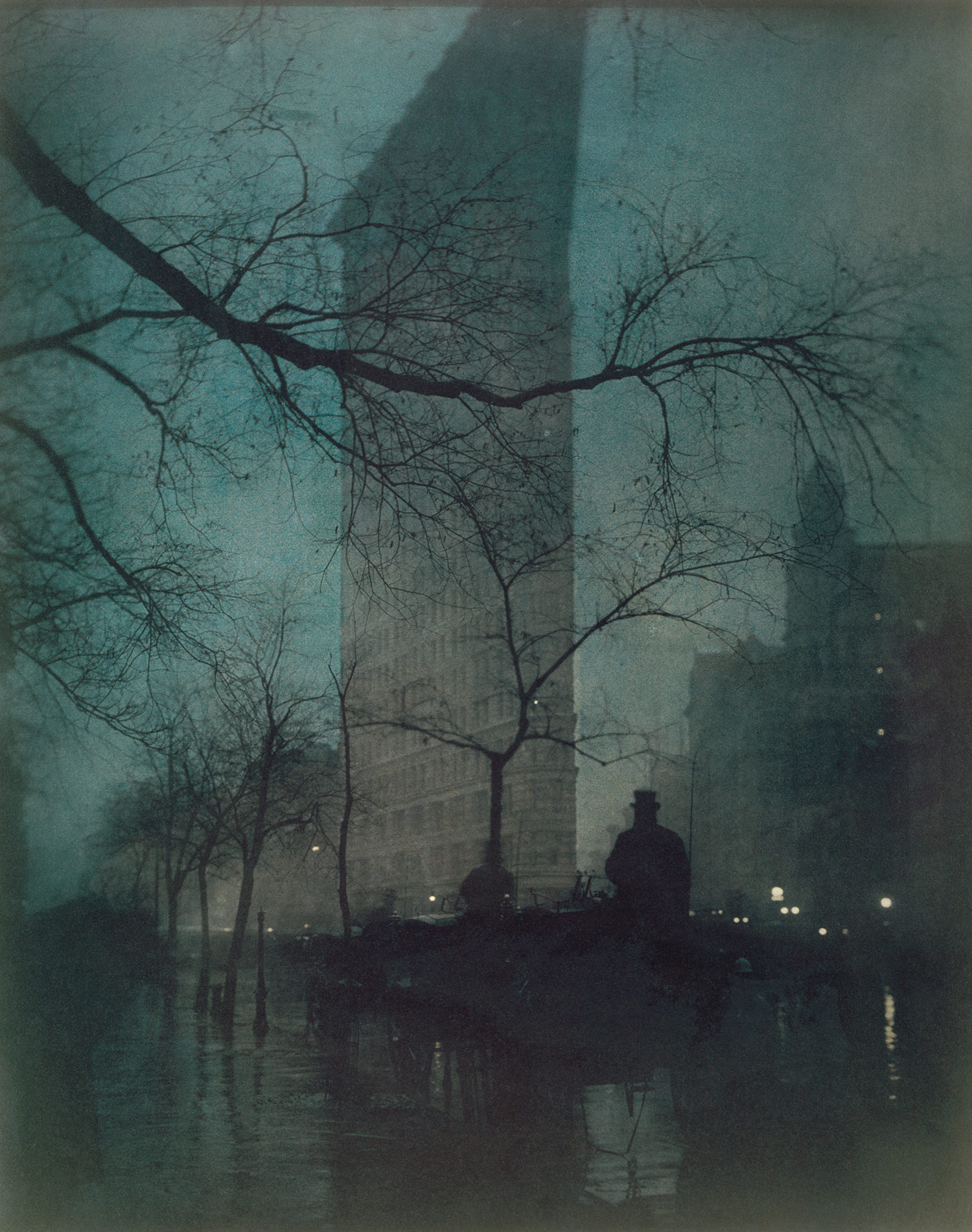
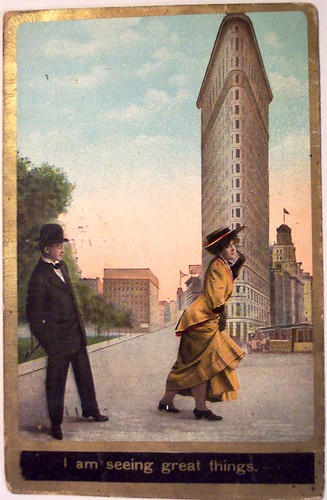
 The Flatiron's unique appearance makes it one of the most photographed structures in New York and probably the world. The first of the photos above, by Edward Steichen, has been reproduced so often it is now a cliche'--but it's still lovely. I like the Steiglitz image below it, in which the photographer has found a tree that perfectly matches the shape of the building. But just yesterday, my colleague Pete Beatty discovered an equally wonderful picture online that reminds us why, according to urban lore, the intersection of Broadway and 23rd Street gave rise to the expression "23-Skidoo": this was where the cops had to shoo away fellows who would ogle the ladies.
P.S. Thanks to reader Tinker Greene who pointed out that the original version of this post I reversed the names of Steichen and Steiglitz. Even editors need editors.