Monday, November 23, 2009

The Publisher's Secret Weapon: Book Designers


One of the most fun parts of being a publisher is working with incredibly talented designers. I love the visual and tactile elements of bookmaking. In my first publishing job, I worked in a very small, very fine independent publishing house where, in addition to answering the phone and reading the slush pile, I sometimes got to design book interiors and jackets. I'm not sure I have ever enjoyed my work more than I did then.

I don't design books any more, because we have a highly experienced creative director who does it full time, and can call on gifted freelance designers. But I can still muse for hours over whether Janson or Baskerville is a more appropriate typeface for a new biography we're about to publish.

One of the highlights of any season, for me, is when our creative director (formerly Amy King, now Patti Ratchford) brings in the jacket comps for the upcoming list. Going into one of those meetings I always feel like a kid coming downstairs to look under the Christmas tree. You don't know what you're going to see but you know there's going to be something great.

I'll usually talk to our creative director about a direction for the design of a given jacket, and sometimes we'll talk about specific images or an author may supply some. And on a very few occasions I'll make specific suggestions about how I want a jacket to look. But I have learned it's usually a lot better not to micromanage designers and instead to let them come up with treatments on their own. What's remarkable to me--since as an editor I usually think I know the work more intimately than a designer can--is how often they will create a jacket that I would never have dreamed of, yet suits the book perfectly.

Every once in a while--maybe one time out of five or ten--you get a design that just doesn't work and have to go back to the drawing board. Sometimes it's because the designer just doesn't "get" that title. Very often, if the designer is having trouble with the jacket, it's a sign that the editor or publisher haven't positioned the book clearly enough. Is it a coming of age novel that happens to be set in India, or a gritty portrait of the slums of Mumbai? Is it a history of American foreign policy since 2001, or an argument that we should play a different role in the world? If the editor hasn't figured that out, the designer is going to have a hard time nailing the jacket.

On the other hand, I have sometimes seen our designers create jackets that made a book look more interesting than I thought it was when I heard about it in a launch meeting. Could it be that my colleagues sometimes think that about my titles? I'd prefer not to dwell on that possibility.

It occurs to me that as I write this that I should post some examples of beautiful Bloomsbury Press jackets. I'll do that a bit later on. What got me started on this train of thought was a Wall Street Journal slideshow of nifty new covers for some classic Nabokov titles. I suspect designers enjoy a commission like this, because when the title is a classic, it's already "branded": you don't have to worry so much about conveying what's inside and have more visual freedom. In this series of reissues, nodding to Nabokov's interest in butterflies, each one is designed as a specimen box. They are all distinctive and witty; I think my favorite is Carin Goldberg's understated cover for Pnin, above.

Update: William Drenttel has pointed out that all 18 covers in the Nabokov set were first published on Design Observer. I should have given a hat tip to John Gall, art director for the series, who talks about the project there.

Saturday, November 21, 2009

Hanging Out with Poe, Coleridge, and Terry Jacobus


A recent post by Mike Shatzkin about "verticals" (a key publishing topic that I'll write more about later) led me to PoetrySpeaks.com. This is a really interesting new site that brings together all sorts of content for poetry lovers, including not just the text of classic and new poems, but audio recordings and in some cases videos. You can read or listen to Shelley's Ozymandias, Poe's The Raven, or Tennyson's Charge of the Light Brigade. (The sound quality on the latter is so poor I wonder whether it's a very early recording of Tennyson himself? Fascinatingly, it's listed as the most popular poem on the site.). You can hear contemporary poets reading their work. Or you can even upload your own spoken-word recordings to a section called "YourMic."

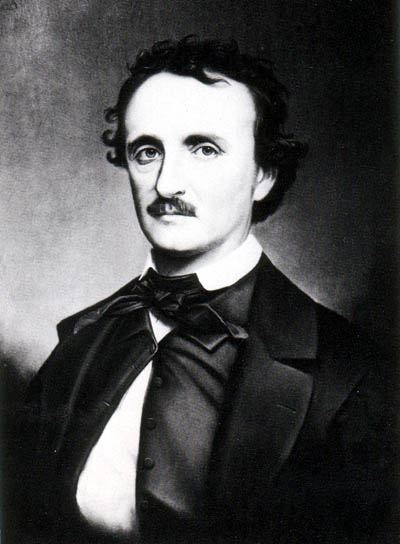
Speaking of Poe, an unexpected benefit of being in the Twitterstream is that I learned about the funny and poignant poem below from a tweet. Here are just the first few lines.


So Edgar Allan Poe Was In This Car
Terry Jacobus

So Edgar Allan Poe was in this car goin' the wrong way on ol' 66
and it's snowin' hard and he's pissed off and worried about
everything so he manages to pull over to the side and his woman
gets outta the car to check out the situation but Edgar won't get
out and his woman realizes that he isn't gettin' out so she goes
to wunna them phone stands near a big pole by the Wrong Way
sign
And calls up his friend Sam Coleridge and Sam says, "Okay,
Hold on, I'll be right out there." ...

The full text (and audio) is on PoetrySpeaks here.

Friday, November 20, 2009

The Kindest Word in the English Language

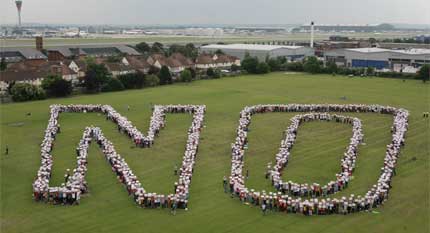
I've often heard my father say, "sometimes the kindest word in the English language is No." He has been both an editor and a writer, and I think his views on this point come from the latter perspective. When you have sent a manuscript or a pitch to a publisher, what you want to hear, of course, is Yes. But failing that, a quick No is a lot more helpful, and merciful, than a long, agonizing silence.

When I was a junior editor, I wanted to impress agents with my keen editorial brain, so I would sometimes take an hour or more to craft a rejection letter that showed my incisive understanding of the flaws of the manuscript I was sending back. It wasn't that easy to find an hour or two with everything else I had to do, so sometimes it would take me a few weeks actually to compose my brilliant decline. Now that I have been at the game longer, I've realized that a brief, even brusque "no thanks" sent in a day or two is generally more welcome to an agent or author than an extended critique that arrives weeks later. I still sometimes hold onto submissions longer than I should, either because I'm genuinely on the fence or because I've got the bad old feeling that I need to explain why I'm saying no. But I try to err on the side of promptness rather than well-meaning delay.

If editors need to say no more promptly, writers need to learn to say no, period. Nothing is worse for a writer's productivity than, well, all the things he or she does beside writing. Going to conferences, reading other people's galleys to blurb them, doing a book review--these are all worthwhile activities, and if you do enough of them, your own book will never get written.  Another memory of my days as a junior editor: I was publishing a novel I was crazy about and I knew a famous literary novelist would be a perfect reader for it. I composed a fervent, personal blurb request and sent it to her with a bound proof. I soon received a letter back from her that read something like this (I'm quoting from memory):
Dear Mr. Ginna,
Here is a partial list of things I am responsible for at this moment: one dog, three cats, a parakeet, two book reviews, three magazine articles, and one novel. Much as I would like to read what you have sent me I cannot possibly take it on at this time.
Yours very truly,
(the famous novelist)
Needless to say I was disappointed and a little miffed; I was even more miffed a couple of months later when I found a colleague of mine had received the same letter, with her name typed in where mine had been. The famous novelist was cranking out form letters in reply to our heartfelt entreaties!

By the time I got to be a grizzled senior editor, I felt differently about these form letters. I had realized that most people who got my begging letters didn't bother to write back at all, so the prompt form letter was comparatively courteous. And having worked with many more authors, I had seen how many of them got nibbled to death by well-intentioned requests and projects, and were months or years late on their commitments, because they were too nice to say No. It is not a coincidence that the famous novelist has written more than two dozen books in the two decades since our exchange.

The problem is not confined to the literary world. I recently came across the printed postcard that Francis Crick, who became a world celebrity for his role in deciphering the structure of DNA, used to fend off the stream of requests that came his way.


Sometimes saying No is a kindness to yourself, too.

Thursday, November 19, 2009

Bono, Bill Gates, and How "Philanthrocapitalists" Are Trying to Save the World


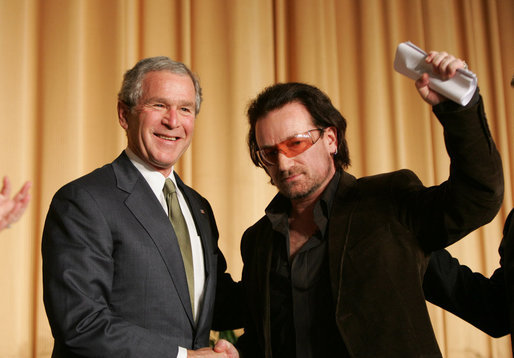
One of the most original books I've published in the past year is Philanthrocapitalism: How Giving Can Save the World, by Michael Green and Matthew Bishop. "Philanthrocapitalism" is a term coined by Bishop, who writes for The Economist, to describe the new-model approach to charity of many of today's super-rich.

Most of them--like Bill Gates, Warren Buffett, or Michael Bloomberg--come from a business background, and while they're prepared to give their money away, they want to get the maximal bang for their charitable bucks. Others, like Bono or Oprah Winfrey, are celebrities who are deploying their fame as well as their money--but they too understand the concept of leverage. All together, this class of megadonors is truly changing the world. Not only because their money is making a difference, but because their strategies and tools are making many organizations more savvy and effective. So the book has something to say to anyone interested in social entrepreneurship, NGOs, or volunteerism.

Bishop and Green have recently launched a very lively website with lots of information on this topic, and one-one-one interviews with figures such as Bill Gates. Worth a visit if you are involved in charity, volunteering, or you are trying to figure out with to do with a spare billion.