Showing posts with label Design. Show all posts

Monday, December 21, 2009

How to Make a Small Fortune in Publishing, or, A Bit More on the E-Book Wars


Whew. As I might have expected, last week’s posts on the E-Book Wars (part 1 here and 2 here) attracted a lot of lively and thoughtful comments. They expressed several points of view but two opposing themes can be seen.

One group of commenters asks: Who needs publishers? In a digital marketplace authors can readily reach readers directly. Sure, editing is important but, wrote one, “what’s to stop authors from forming consortiums that hire editors?” Instead of settling for a big publisher’s split of royalties, you could distribute the book yourself and keep 100 percent of the profits, or use a service like Smashwords that offers an 85 percent share. This commenter continued, “Right now the business model is that writers are the suppliers of publishers. But it is conceivable that it could become the other way around.”

Another group sticks up for publishers. In defense of Random House’s claim to control e-book rights, these commenters noted that “Books are words in a precise order and meant to be read,” and ask why an e-book is any different. They also point out “the amount of time, effort and money [involved in] making what goes between the two covers of a traditional book.” They ask, not unreasonably, shouldn’t the publisher be entitled to a significant share of income from an e-book whose value is enhanced by the careful editing, copyediting, proofreading, and so on that go into it?

Both groups have legitimate points to make. The book business looks from one perspective like publishers “buy” content from authors and then resell it. But from another perspective, we’re providing a service—enabling the author to reach readers (and collect money for his content). Around Bloomsbury we sometimes say “the author is our customer.” In a sense we are selling the services of editing, design, printing, marketing, distribution and so on. Could a group of authors do the same things themselves? Yes. Of course, then in effect they’d become….publishers. An authors’ co-op might produce more money for writers than a conventional publishing contract, but I don’t know if it would make either writing or publishing radically more lucrative.

As old hands in the business like to say, “If you want to make small fortune in publishing, start with a large one.”

Much ink and many pixels have been spilled on the Random House e-rights issue discussed here last week, and I don’t think I’ll wade into that still-unsettled question again now. I would observe here that although I raised questions about Random’s position on backlist contracts, I agree with them, and most every other publisher, that e-book rights should not be separated from print rights.

Reading a book is reading a book, whether the item being read is a hardcover, a Kindle, or a PDF on a laptop. Amazon and other e-vangelists argue that e-book sales are additional to print sales—that e-book lovers wouldn’t be buying print copies if they weren’t reading them on their Kindles. I’m sure that is true for some books and some readers, but to some extent we know e-book sales replace print sales. It’s clearly essential for a publisher to control all versions of a book that their readers might want to buy. That much is widely accepted by both houses and agents, though there is still debate about what royalties should be paid.

I also agree that those who want to chop down publishers’ share of e-book royalties are often neglecting the big picture. Not only do publishers enhance the value of an author’s work by editing, proofreading and performing those other tasks that go into producing the product you find in a bookstore. They perform a range of other functions that contribute materially to that value. And one of the most important things that publishers do to market electronic books is—sell printed books! I’ll talk about this more in a future post.

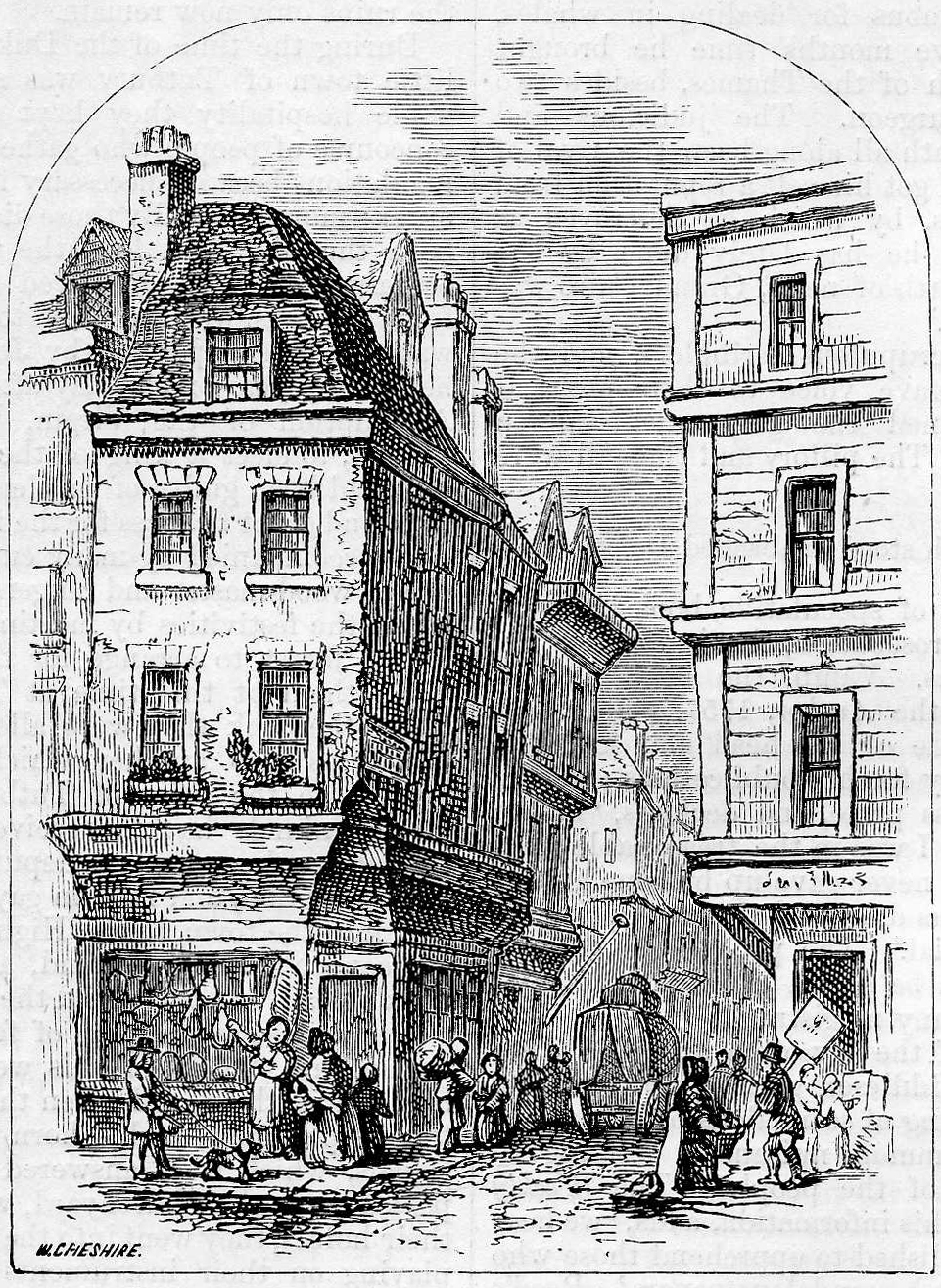
(illustration: Grub Street, later known as Milton Street, from Chambers' Book of Days)

Monday, November 23, 2009

The Publisher's Secret Weapon: Book Designers


One of the most fun parts of being a publisher is working with incredibly talented designers. I love the visual and tactile elements of bookmaking. In my first publishing job, I worked in a very small, very fine independent publishing house where, in addition to answering the phone and reading the slush pile, I sometimes got to design book interiors and jackets. I'm not sure I have ever enjoyed my work more than I did then.

I don't design books any more, because we have a highly experienced creative director who does it full time, and can call on gifted freelance designers. But I can still muse for hours over whether Janson or Baskerville is a more appropriate typeface for a new biography we're about to publish.

One of the highlights of any season, for me, is when our creative director (formerly Amy King, now Patti Ratchford) brings in the jacket comps for the upcoming list. Going into one of those meetings I always feel like a kid coming downstairs to look under the Christmas tree. You don't know what you're going to see but you know there's going to be something great.

I'll usually talk to our creative director about a direction for the design of a given jacket, and sometimes we'll talk about specific images or an author may supply some. And on a very few occasions I'll make specific suggestions about how I want a jacket to look. But I have learned it's usually a lot better not to micromanage designers and instead to let them come up with treatments on their own. What's remarkable to me--since as an editor I usually think I know the work more intimately than a designer can--is how often they will create a jacket that I would never have dreamed of, yet suits the book perfectly.

Every once in a while--maybe one time out of five or ten--you get a design that just doesn't work and have to go back to the drawing board. Sometimes it's because the designer just doesn't "get" that title. Very often, if the designer is having trouble with the jacket, it's a sign that the editor or publisher haven't positioned the book clearly enough. Is it a coming of age novel that happens to be set in India, or a gritty portrait of the slums of Mumbai? Is it a history of American foreign policy since 2001, or an argument that we should play a different role in the world? If the editor hasn't figured that out, the designer is going to have a hard time nailing the jacket.

On the other hand, I have sometimes seen our designers create jackets that made a book look more interesting than I thought it was when I heard about it in a launch meeting. Could it be that my colleagues sometimes think that about my titles? I'd prefer not to dwell on that possibility.

It occurs to me that as I write this that I should post some examples of beautiful Bloomsbury Press jackets. I'll do that a bit later on. What got me started on this train of thought was a Wall Street Journal slideshow of nifty new covers for some classic Nabokov titles. I suspect designers enjoy a commission like this, because when the title is a classic, it's already "branded": you don't have to worry so much about conveying what's inside and have more visual freedom. In this series of reissues, nodding to Nabokov's interest in butterflies, each one is designed as a specimen box. They are all distinctive and witty; I think my favorite is Carin Goldberg's understated cover for Pnin, above.

Update: William Drenttel has pointed out that all 18 covers in the Nabokov set were first published on Design Observer. I should have given a hat tip to John Gall, art director for the series, who talks about the project there.