Thursday, December 31, 2009

Is This the Future of the Book?


The Doctor is IN, and back from a refreshing holiday hiatus. As we look forward to 2010, it seems appropriate to look at an intriguing invention from one of our leading futurists. 

2009 has been the year of reading about the Kindle, the Nook, and various other kinds of e-book readers. But the latest invention for electronic reading technology is not a gadget, it's a software application called Blio. The creation of tech genius and futurist Ray Kurzweil, Blio is a tool, or platform, that can run (as of now) on PCs, iPhones or iPod Touches. Unlike "e-ink" based readers like Kindle or Nook, Blio can display illustrations at high resolution and in full color. It can also include video and animation.


On one hand, Blio offers the advantage that it can preserve the typography, design, and illustration you find in a printed book. Much as I like my Kindle, I dislike the way it presents every work in the same generic typeface with none of the individual design touches that you find in a well-made print volume. On the the other hand, Blio has the possibility of providing a much richer package to the reader, adding soundtracks, video clips, 3D maps, animated diagrams, and so on to plain-vanilla text. 


I think Blio's biggest plus right now is something simpler: the fact that it can work on multiple devices. Kurzweil argues, and I'd agree, that most people don't want to carry several gadgets around with them. If there's a tool that allows them to read a book on their laptops or their iPhones just as pleasantly as on their Kindles, the Kindles may wind up gathering dust in the cupboard. I believe that in a few years the e-book landscape is going to look quite different from the way it appears now, with Amazon far less dominant in the future than its current market share suggests. But that's maybe something to discuss in more depth at anothe time.


Meanwhile, Wired's Gadget Lab sees Blio as something much grander than a new way to read e-books. It declares "Blio looks solid, but it signifies something much bigger: the end of the paper book. Right now, e-books are poor copies of paper books, with a single advantage: convenience. A book is just a container for text, not its natural home." 


Are paper books obsolete? I have my doubts, for reasons I'll discuss in my next post. Meanwhile I'll welcome comments from you. 

Thursday, December 24, 2009

A Christmas Poem: Thomas Hardy's "The Oxen"


One more poem for the Christmas break.


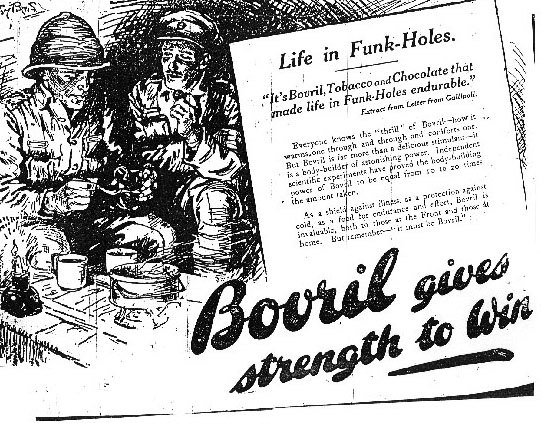
Thomas Hardy's "The Oxen" was first published on Christmas Eve, 1915. It was printed in the Times of London, cheek by jowl with news of the horrific conflict that was ravaging Europe; nearby was the advertisement shown below, touting Bovril as the tonic for men in the trenches. The second line refers to the folk belief that farm animals kneel at midnight on Christmas Eve. I have always loved the understatement of this poem, which seems even more poignant in a time when "holiday mix" blares from the speakers in every mall (and war is still ravaging).

 Christmas Eve, and twelve of the clock.
"Now they are all on their knees,"
An elder said as we sat in a flock
By the embers in hearthside ease.

We pictured the meek mild creatures where
They dwelt in their strawy pen,
Nor did it occur to one of us there
To doubt they were kneeling then.

So fair a fancy few would weave
In these years! Yet, I feel,
If someone said on Christmas Eve,
"Come; see the oxen kneel,

"In the lonely barton by yonder coomb
Our childhood used to know,"
I should go with him in the gloom,
Hoping it might be so.


There's an interesting article at The Victorian Web about the poem and its context (including the ad, with its "sacramental" portrayal of Bovril).
 

Wednesday, December 23, 2009

How Bad Was 2009? It Could Be Verse


Now any writer sane or dotty
Calls himself a twitterati,
Producing literary treasures
In hundred forty unit measures.
The future Milton, Pope, or Keats—
Immortalized in deathless tweets!


I have referred more than once on this page to the very astute commentary of the literary agent and e-book publisher Richard Curtis, who blogs at ereads.com.  Richard's blog is worth reading not only for his insights into the changing book business but for his sense of humor. And in this week's issue of Publishers Weekly, he sums up the past year in a very witty poem.  A couple of brief excerpts above and below, but treat yourself to reading the whole thing here.


Two thousand nine—the year that we
Were taught the benefits of “free.”
A book is now considered bought
When it is sold to you for naught.
This paradox makes perfect sense
Unless you hope for recompense.
We learned that zero is a price.
If you’re the buyer? Really nice!
If you’re the seller? Lots of luck.

Monday, December 21, 2009

How to Make a Small Fortune in Publishing, or, A Bit More on the E-Book Wars


Whew. As I might have expected, last week’s posts on the E-Book Wars (part 1 here and 2 here) attracted a lot of lively and thoughtful comments. They expressed several points of view but two opposing themes can be seen.

One group of commenters asks: Who needs publishers? In a digital marketplace authors can readily reach readers directly. Sure, editing is important but, wrote one, “what’s to stop authors from forming consortiums that hire editors?” Instead of settling for a big publisher’s split of royalties, you could distribute the book yourself and keep 100 percent of the profits, or use a service like Smashwords that offers an 85 percent share. This commenter continued, “Right now the business model is that writers are the suppliers of publishers. But it is conceivable that it could become the other way around.”

Another group sticks up for publishers. In defense of Random House’s claim to control e-book rights, these commenters noted that “Books are words in a precise order and meant to be read,” and ask why an e-book is any different. They also point out “the amount of time, effort and money [involved in] making what goes between the two covers of a traditional book.” They ask, not unreasonably, shouldn’t the publisher be entitled to a significant share of income from an e-book whose value is enhanced by the careful editing, copyediting, proofreading, and so on that go into it?

Both groups have legitimate points to make. The book business looks from one perspective like publishers “buy” content from authors and then resell it. But from another perspective, we’re providing a service—enabling the author to reach readers (and collect money for his content). Around Bloomsbury we sometimes say “the author is our customer.” In a sense we are selling the services of editing, design, printing, marketing, distribution and so on. Could a group of authors do the same things themselves? Yes. Of course, then in effect they’d become….publishers. An authors’ co-op might produce more money for writers than a conventional publishing contract, but I don’t know if it would make either writing or publishing radically more lucrative.

As old hands in the business like to say, “If you want to make small fortune in publishing, start with a large one.”

Much ink and many pixels have been spilled on the Random House e-rights issue discussed here last week, and I don’t think I’ll wade into that still-unsettled question again now. I would observe here that although I raised questions about Random’s position on backlist contracts, I agree with them, and most every other publisher, that e-book rights should not be separated from print rights.

Reading a book is reading a book, whether the item being read is a hardcover, a Kindle, or a PDF on a laptop. Amazon and other e-vangelists argue that e-book sales are additional to print sales—that e-book lovers wouldn’t be buying print copies if they weren’t reading them on their Kindles. I’m sure that is true for some books and some readers, but to some extent we know e-book sales replace print sales. It’s clearly essential for a publisher to control all versions of a book that their readers might want to buy. That much is widely accepted by both houses and agents, though there is still debate about what royalties should be paid.

I also agree that those who want to chop down publishers’ share of e-book royalties are often neglecting the big picture. Not only do publishers enhance the value of an author’s work by editing, proofreading and performing those other tasks that go into producing the product you find in a bookstore. They perform a range of other functions that contribute materially to that value. And one of the most important things that publishers do to market electronic books is—sell printed books! I’ll talk about this more in a future post.

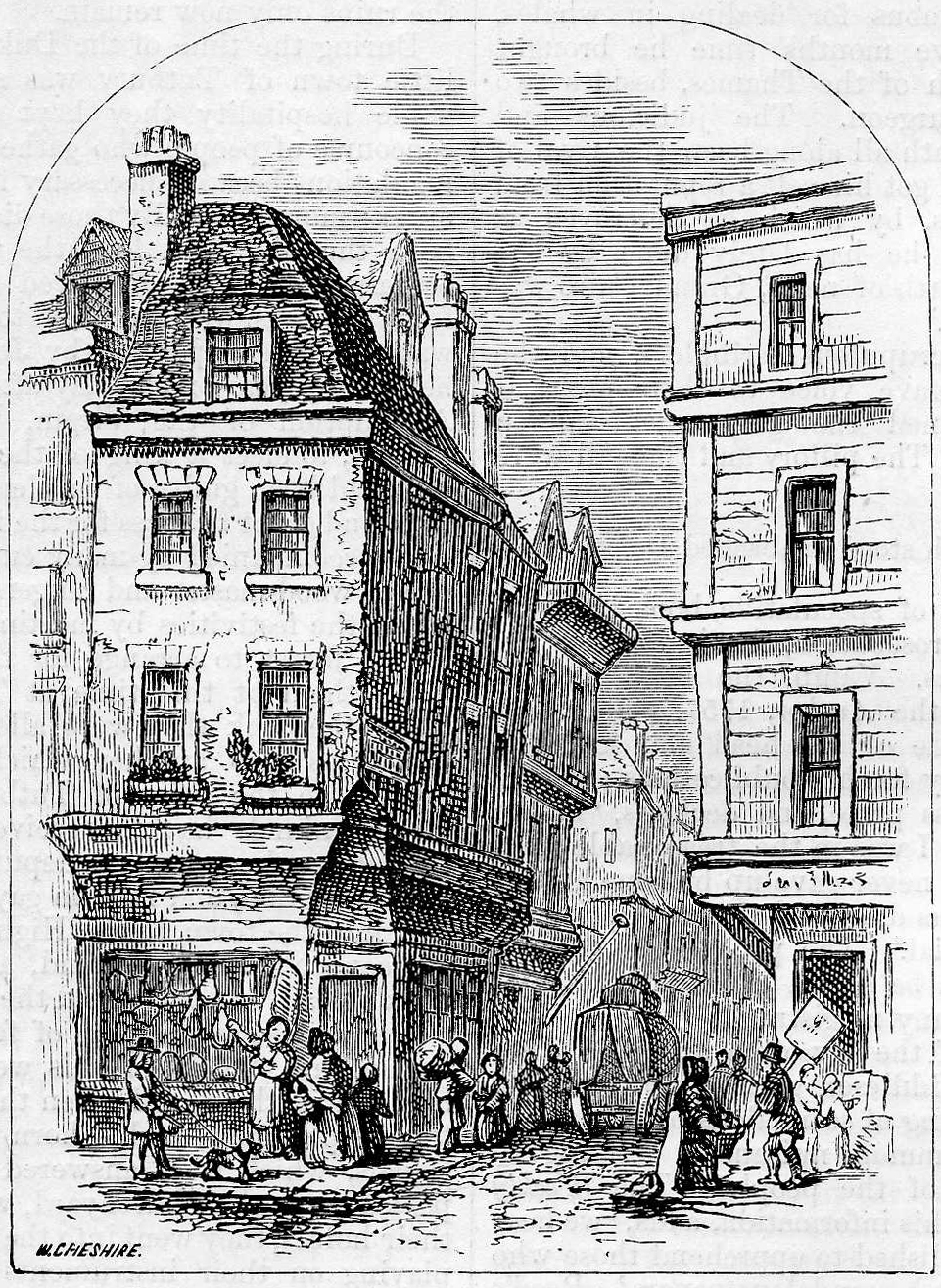
(illustration: Grub Street, later known as Milton Street, from Chambers' Book of Days)