Thursday, December 24, 2009

A Christmas Poem: Thomas Hardy's "The Oxen"


One more poem for the Christmas break.


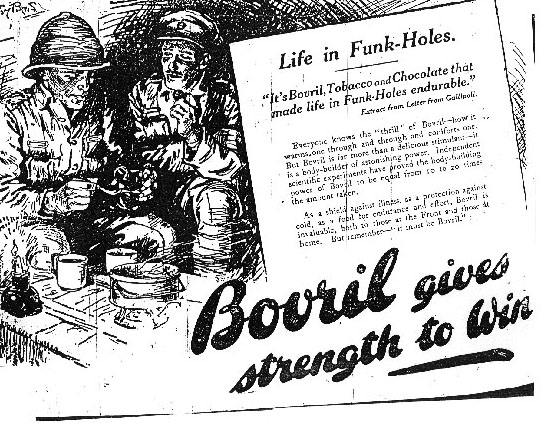
Thomas Hardy's "The Oxen" was first published on Christmas Eve, 1915. It was printed in the Times of London, cheek by jowl with news of the horrific conflict that was ravaging Europe; nearby was the advertisement shown below, touting Bovril as the tonic for men in the trenches. The second line refers to the folk belief that farm animals kneel at midnight on Christmas Eve. I have always loved the understatement of this poem, which seems even more poignant in a time when "holiday mix" blares from the speakers in every mall (and war is still ravaging).

 Christmas Eve, and twelve of the clock.
"Now they are all on their knees,"
An elder said as we sat in a flock
By the embers in hearthside ease.

We pictured the meek mild creatures where
They dwelt in their strawy pen,
Nor did it occur to one of us there
To doubt they were kneeling then.

So fair a fancy few would weave
In these years! Yet, I feel,
If someone said on Christmas Eve,
"Come; see the oxen kneel,

"In the lonely barton by yonder coomb
Our childhood used to know,"
I should go with him in the gloom,
Hoping it might be so.


There's an interesting article at The Victorian Web about the poem and its context (including the ad, with its "sacramental" portrayal of Bovril).
 

Wednesday, December 23, 2009

How Bad Was 2009? It Could Be Verse


Now any writer sane or dotty
Calls himself a twitterati,
Producing literary treasures
In hundred forty unit measures.
The future Milton, Pope, or Keats—
Immortalized in deathless tweets!


I have referred more than once on this page to the very astute commentary of the literary agent and e-book publisher Richard Curtis, who blogs at ereads.com.  Richard's blog is worth reading not only for his insights into the changing book business but for his sense of humor. And in this week's issue of Publishers Weekly, he sums up the past year in a very witty poem.  A couple of brief excerpts above and below, but treat yourself to reading the whole thing here.


Two thousand nine—the year that we
Were taught the benefits of “free.”
A book is now considered bought
When it is sold to you for naught.
This paradox makes perfect sense
Unless you hope for recompense.
We learned that zero is a price.
If you’re the buyer? Really nice!
If you’re the seller? Lots of luck.

Monday, December 21, 2009

How to Make a Small Fortune in Publishing, or, A Bit More on the E-Book Wars


Whew. As I might have expected, last week’s posts on the E-Book Wars (part 1 here and 2 here) attracted a lot of lively and thoughtful comments. They expressed several points of view but two opposing themes can be seen.

One group of commenters asks: Who needs publishers? In a digital marketplace authors can readily reach readers directly. Sure, editing is important but, wrote one, “what’s to stop authors from forming consortiums that hire editors?” Instead of settling for a big publisher’s split of royalties, you could distribute the book yourself and keep 100 percent of the profits, or use a service like Smashwords that offers an 85 percent share. This commenter continued, “Right now the business model is that writers are the suppliers of publishers. But it is conceivable that it could become the other way around.”

Another group sticks up for publishers. In defense of Random House’s claim to control e-book rights, these commenters noted that “Books are words in a precise order and meant to be read,” and ask why an e-book is any different. They also point out “the amount of time, effort and money [involved in] making what goes between the two covers of a traditional book.” They ask, not unreasonably, shouldn’t the publisher be entitled to a significant share of income from an e-book whose value is enhanced by the careful editing, copyediting, proofreading, and so on that go into it?

Both groups have legitimate points to make. The book business looks from one perspective like publishers “buy” content from authors and then resell it. But from another perspective, we’re providing a service—enabling the author to reach readers (and collect money for his content). Around Bloomsbury we sometimes say “the author is our customer.” In a sense we are selling the services of editing, design, printing, marketing, distribution and so on. Could a group of authors do the same things themselves? Yes. Of course, then in effect they’d become….publishers. An authors’ co-op might produce more money for writers than a conventional publishing contract, but I don’t know if it would make either writing or publishing radically more lucrative.

As old hands in the business like to say, “If you want to make small fortune in publishing, start with a large one.”

Much ink and many pixels have been spilled on the Random House e-rights issue discussed here last week, and I don’t think I’ll wade into that still-unsettled question again now. I would observe here that although I raised questions about Random’s position on backlist contracts, I agree with them, and most every other publisher, that e-book rights should not be separated from print rights.

Reading a book is reading a book, whether the item being read is a hardcover, a Kindle, or a PDF on a laptop. Amazon and other e-vangelists argue that e-book sales are additional to print sales—that e-book lovers wouldn’t be buying print copies if they weren’t reading them on their Kindles. I’m sure that is true for some books and some readers, but to some extent we know e-book sales replace print sales. It’s clearly essential for a publisher to control all versions of a book that their readers might want to buy. That much is widely accepted by both houses and agents, though there is still debate about what royalties should be paid.

I also agree that those who want to chop down publishers’ share of e-book royalties are often neglecting the big picture. Not only do publishers enhance the value of an author’s work by editing, proofreading and performing those other tasks that go into producing the product you find in a bookstore. They perform a range of other functions that contribute materially to that value. And one of the most important things that publishers do to market electronic books is—sell printed books! I’ll talk about this more in a future post.

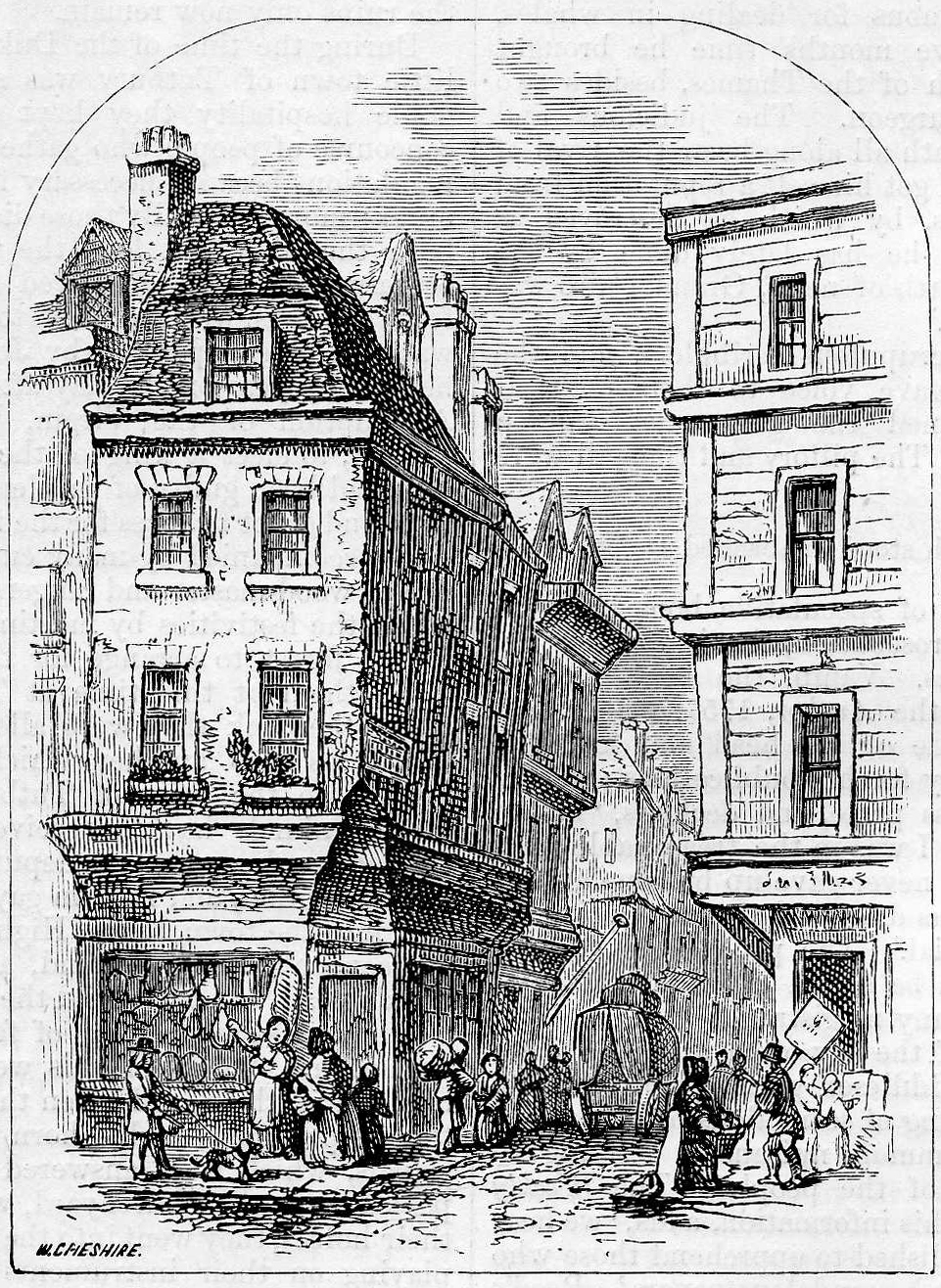
(illustration: Grub Street, later known as Milton Street, from Chambers' Book of Days)

Thursday, December 17, 2009

The E-Book Wars Have Really Begun, Part 2


Yesterday, in Part 1 of this post, I wrote about a flurry of events that suggest the phony war over digital publishing is over and live ammunition is now flying. First, three big houses tussled with Amazon over “windowing,” or delaying publication of e-books relative to hardcovers. Then, more momentously, Random House attempted to put barbed wire around e-rights to its backlist.

Next, the most aggressive move yet: mega-bestselling author Stephen Covey—who has long published with Simon & Schuster—announced he had made a deal with Amazon to sell Kindle editions of two of his biggest titles via another electronic publisher.  This, of course, is exactly what big publishers have feared and what Random House’s bluster is trying to forestall. To the extent that e-book sales of Covey’s books supplant sales of their print editions, that’s vital backlist revenue disappearing from S&S’s p&l, not to mention potential growth the house is losing out on. Covey will apparently be releasing some of his new titles through Amazon exclusively, so S&S won’t see those dollars either.

What I don’t understand is why Simon didn’t pre-empt this move by issuing their own Kindle edition: they have already released e-books of several other Covey titles so you’d have thought the terms of an arrangement were in place. You’d also have thought S&S would hustle to get the Kindle edition of a backlist leader like The Seven Habits of Highly Effective People into the market-especially given that Amazon reports Covey stands 13th on their all-time bestseller list. 


I can only assume there are other issues in play or that some negotiation between S&S and Covey broke down--quite possibly over royalties: the author is apparently receiving more than 50% of the net proceeds from his e-publisher. (Adding piquancy, the e-publisher who’s handling Covey’s Amazon title is RosettaBooks, the same one Random House sued over backlist e-rights in 2001.)

This creates an interesting situation.

Simon & Schuster has not conceded that they don’t control e-book rights to backlist titles; they say it’s “their intention” to publish those books digitally. They probably don’t want to pick a fight with Stephen Covey, one of the biggest authors on their list. He says he is happy with them, and they are surely hoping to publish new Covey titles in the future. But if they let him walk away with e-rights to backlist bestsellers, how do they hold the line with other authors? They may suddenly find the whole backlist vanishing.

And if that happens, it will leave Random House—and the other Big Six publishers--in a very awkward position, trying to cling to electronic rights that one of their biggest competitors has given up. 

In short, it looks to me like the free-for-all we have long been expecting has begun. 


(Illustration from "The Seven Habits of Highly Effective Soldiers, Starring Sgt Rock," at Chris's Invincible Super-Blog)