Wednesday, March 3, 2010

Should Publishers Trust Their Authors? or, Hiroshima Mon Cul

[Thanks to the Huffington Post, which ran this piece on their lively Books page today. You may see future posts of mine there from time to time.]

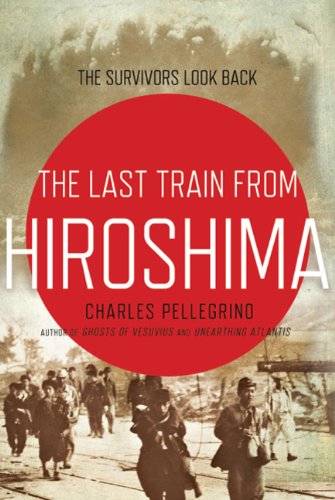
The kerfuffle of the week has been the news that an acclaimed new book, The Last Train from Hiroshima by Charles Pellegrino, had to be withdrawn by its publisher following the revelation that important details in it, including the testimony of a supposed eyewitness source, were apparently fabricated. 

As happened in earlier cases of authors doctoring the truth, some readers have raised questions about "quality control" problems in publishing, and asked, don't publishers fact-check their products?

Well, no, actually. A major difference between book and magazine or newspaper publishing is that publishers don't have fact-checkers on staff, and never have. This is not, as some cynics might suppose, because book publishers don't care about accuracy as long as a book sells. It's partly because, unlike those media where advertisers support (or used to) a large editorial staff, book publishing has been a far leaner enterprise (or as some would say, a cottage industry).  But a more important reason, I believe, is that in book publishing, unlike journalism, the content has traditionally belonged to the author, not to the house.

This is reflected in book contracts, where copyright is typically retained by the author; more to the point, it's firmly established in publishing culture that you never make editorial changes without an author's consent. As an editor you may lean pretty hard on an author to make revisions you feel are necessary (Gordon Lish's interventions with Raymond Carver being the extreme example)--but ultimately, "the book belongs to the author," and to change it or not is his or her prerogative. With that prerogative goes, inevitably, a greater responsibility for the quality of what you write.

Now, any good publisher wants to produce the best books possible. While we don't have fact-checkers, we have copyeditors who go through manuscripts with a fine-tooth comb, after the editor has already worked with the author to get the book in shape. I have done my own fact-checking from time to time when an author's statement seemed questionable, and the best copyeditors will frequently check sources as well as spelling and punctuation. Furthermore,  any manuscript that might raise issues such of defamation or privacy goes through a careful legal review. In the end, though, we have to trust our authors.

I don't take on a work of nonfiction, especially a controversial or even unconventional one, without satisfying myself, perhaps just at gut level, that the author is presenting the truth responsibly. But I have to recognize that I can be fooled. Reading about the case of Charles Pellegrino, who supposedly produced--or at least, said he had--documentation of his bogus souce (who was a real person, but apparently not present at the event he claimed to witness), I suspect I might well have accepted the author's account.

Once we have decided to trust an author, we usually give him or her the benefit of the doubt on matters of fact just as on matters of style or argument. Of course, this leaves us vulnerable. But in book publishers' defense, the impulse to trust the people you work with is a hard one to overcome. Look at the cases of Janet Cooke, Stephen Glass, or Jayson Blair, whose fabrications sailed through the presumably gimlet-eyed fact-checking operations of the Washington Post, New Republic, and New York Times respectively.


(Photo of the Bocca della Verita, or Mouth of Truth, at the Church of Santa Maria in Cosmedin in Rome, via Wikimedia Commons. It's said that if you tell a lie with your hand in the mouth of the sculpture, it will be bitten off. Maybe every publisher needs one of these?)

Wednesday, February 24, 2010

Introducing a Terrific Young Historian

In my first post on this blog I promised not to use the word "excited" more than once a month. But sometimes there's no other word to describe how an editor feels about a book. I've just published a new work of history that quickened my pulse from the first time I read the proposal: Rawn James, Jr's. Root and Branch: Charles Hamilton Huston, Thurgood Marshall, and the Struggle to End Segregation. This book tells one of the most important, most dramatic, yet least known stories in American history, and makes it not only exciting, but deeply poignant.
     When we think of the Civil Rights movement, we tend to think of the 1950s and 60s, and scenes made famous by television-the bus boycott, the March on Washington, the Freedom Rides. But some of the most compelling, most dramatic, and most  important victories took place long before then, in America's courtrooms, where two determined lawyers waged a decades-long battle against racial injustice.
     The men were Charles Hamilton Houston and Thurgood Marshall, attorneys for the NAACP. From the 1930s to the 50s, they crisscrossed the country, going from backwoods county jails to the Supreme Court to fight for the legal rights of African Americans.  In the Deep South, they sometimes slept in their car because no hotel would give them a room. They were heckled, threatened, and sometimes in danger of their lives. But in those days bigotry was not confined to the backwoods--it went all the way to the nation's capital. When Charles Houston argued his first case before the Supreme Court, one justice turned his chair to face the wall so he wouldn't have to look at a "colored" lawyer.
     What the justices could not ignore was the razor-sharp arguments, and the relentless preparation, of Houston, Marshall and their colleagues. Case by case, slowly, methodically, but relentlessly, they dismantled the legal principle of "separate but equal" that had kept blacks as second-class citizens even after they emerged from slavery.  Over some  two decades, they laid the groundwork for the landmark Supreme Court ruling, Brown vs. Board of Education, that outlawed segregation in public schools and led to the collapse of Jim Crow. Without Houston and Marshall, there would be no Barack Obama. 
     These two great advocates are also a great pair of characters. Charles Houston was a stern, buttoned-down, no-nonsense guy. As a dean of Howard Law School, he turned it from a rinky-dink night school into a rigorous institution whose mission was to turn out the lawyers that could meet the white elite on equal terms. Marshall was his brightest student and his protégé, but in personality his opposite. Thurgood was casual. He loved to lean back and tell off-color jokes over a glass--or maybe a bottle--of bourbon.  The two complemented each other perfectly. In effect, Thurgood became a surrogate son to Charlie. Sadly, Houston worked himself to death and died just before the Brown case, the one he'd been building toward, came to the Supreme Court. But Marshall did his mentor proud: not only did he win a historic victory in Brown, he would become the first African-American to join the Supreme Court.
     Rawn James Jr. is a lawyer himself, and an heir to the great legacy laid down by Houston, Marshall, and those that followed. He tells this story with gusto, with a great sense of pacing and rhythm, and it truly comes to life in his pages. This is Rawn's first book but I'm sure it will not be his last. It's the debut of a dynamic new historian-and, yes, I'm excited by it.

(You can see Rawn talking about his book below, or visit his website, www.rawnjames.com, for more about Root and Branch.)


Wednesday, February 17, 2010

Why Publishers Need to Learn to Talk to the Animals

I've been reflecting some more on the recent debate over e-book prices. Michael Cader's much-applauded post on the topic made the point that in general publishers have not done a good job of explaining either the reasons for their pricing policies, or even the basic facts about the marketplace. He's right, and the situation highlights a problem that the industry is still just beginning to grapple with: big publishers are not used to thinking of readers as their customers.

For a century, publishing has had (as Shiv Singh noted in a presentation at Digital Book World) a business-to-business orientation. Big publishers' customers were retailers, a few wholesalers, and libraries (mostly sold to by wholesalers again). On the rare occasions when an individual reader ordered a book from the publisher, fulfilling the order was such a hassle that the author actually got a reduced royalty because of all the extra costs incurrred.

True, publishers directed some of their marketing (such as advertising) to consumers, and we tried to reach individual readers with publicity. But even our publicity efforts were largely aimed at a small ring of intermediaries like book reviewers or radio/TV producers.  The idea of telling a story about ourselves or our industry to the reading public, or explaining to book buyers why our products cost what they do, wouldn't have occurred to most publishers a few years ago.

It has at least occurred to some houses by now (and some vertically focused houses and imprints are well along at this), but it's a long way from being fully absorbed by the industry. Publishers are a bit like Dr. Dolittle, slowly learning to "talk to the animals." I'm not being pejorative to either side in that remark. Dr. Dolittle loved the animals--but it took him a while to speak their language. Our readers were out there in all their wonderful variety; we loved them; in our way we took care of them--but we never had a conversation with them.

So, at the same time publishing houses are struggling to master the "disintermediated" marketplace where we can, and must, communicate with end users directly, on top of the old, hard work we have to do of telling people about our titles, we have to explain about how the industry works and why $14.99 for a great new novel is not a ripoff.

All of which gives one pause about the "agency model," where publishers set and enforce their own prices. Just as we have no expertise in talking to readers, we have no expertise in what prices work best for what kinds of titles when. Kassia Krozser notes that "price is an important tool in the arsenal of retailers" who are constantly in conversation with readers, and add their value by getting books into those readers' hands. 


Don't get me wrong--I don't believe in rolling over and ceding the job to Amazon or some other behemoth. Just as we have to learn to communicate with readers directly--that is one reason I write this blog--we're going to have to fool around with different pricing schemes and start to figure out for ourselves what works.  Doing so will involve a lot more talking to the animals. 

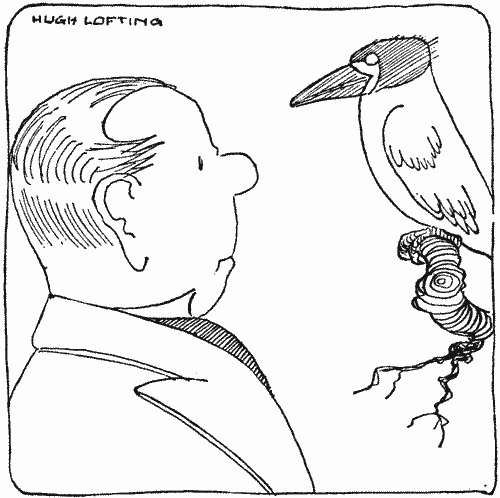
(Illustration by Hugh Lofting from Doctor Dolittle in the Moon)

Saturday, February 13, 2010

Recalled to Life: Kirkus Reviews Finds a Surprise New Owner

Kirkus Reviews, the pre-publication review outlet, was expected to close a few weeks ago, but has now had a reprieve. As Daily Finance reports, the business has been sold to shopping-center mogul, and bookstore owner, Herb Simon, better known for owning the Indiana Pacers. This may seem odd news, but it's good news. As I said in an earlier post, with the huge number of titles clamoring for attention (and often going with virtually none), any service that can help pick some needles out of the haystack is really useful. 


Kirkus will keep its editors and continue to publish bi-weekly. It plans to "beef up" its digital offerings--where there should be plenty of opportunities. Kirkus at one time licensed its reviews to Amazon--I wish they would again, to complement the, er, less gimlet-eyed notices from PW I often find there. Or wouldn't you like to have, say, an app on your iPhone that would deliver a pithy, one-screen-size review of a book you're leafing through in a bookstore? Kirkus would be well suited to that. 


We'll wish the rescued Kirkus success--and hope that their near-death experience may make them a little kinder toward the books they review. Just not kind enough to be boring. 


(image by Phiz from A Tale of Two Cities