Sunday, December 6, 2009
Book Trailers: From the Sublime to the Sublimely Ridiculous
While I firmly believe that publishers need to make greater use of the internet for marketing, I am often skeptical of video book trailers. Few of them have actually made me want to go buy a book. But occasionally one succeeds brilliantly. This one, from the New Zealand Book Council for Maurice Gee's Going West, is so dazzling you almost wonder whether the book can live up to it. But it was enough to make me order a copy.
On the other hand, it seems almost superfluous to create a trailer for Sense and Sensibility and Sea Monsters, Quirk Books' followup to Pride and Prejudice and Zombies. They had me at "Sea Monsters." Still, if you've sat through enough hours of Masterpiece Theater, this bit of Regency gone awry is hard not to enjoy:
Do you think trailers are effective at selling books? Let me know about examples that you think have done the job.

Saturday, December 5, 2009
The LAT Tips THE UNION OF THEIR DREAMS
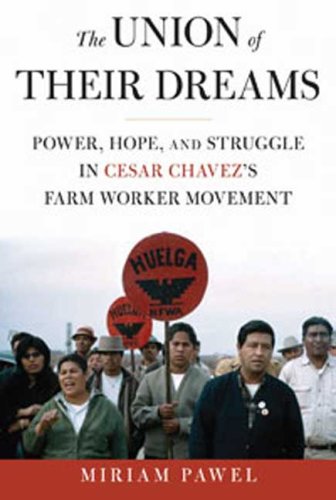
Miriam Pawel has also put together an unusually rich website which offers much more than a typical author page. It contains not just information about her book but archival materials, interviews, photos and other documents connected with her subject, the history of Cesar Chavez and the United Farm Workers. If you're interested in that topic, or simply want to see an excellent example of online outreach by an author, pay it a visit.
Thursday, December 3, 2009
What Publishing Needs Much More Of : Failure

The Twittersphere, or at least publishing's corner of it, has been chattering about Rick Moody's experiment with Twitter-fiction--an original story, "Some Contemporary Characters," that he wrote and posted in tweet-size increments over three days, commissioned by the innovative journal Electric Literature. I won't rehash the details of what happened (see accounts here or here), but for various reasons the venture seems to have attracted a great deal of negative commentary on Twitter and elsewhere. Vroman's Bookstore, which joined the project by co-streaming the story, dropped out midway: They reflect on the experience here, calling the project a "noble failure." A blog post at Telereads asks,"Twitter a flop as a book promoter? Or just a failure with SOME books?"
Maybe the Moody project was a failure. If so, my reaction is: HOORAY! What we need in publishing today is much more failure. The one thing people in the industry can agree on is that the current methods of doing business are showing diminishing returns. The only way we're going to arrive at new methods is by trying dozens, scores, hundreds of new ways of reaching readers, building awareness, and ultimately selling content. Of course, some, probably most of these won't work, but it's through large-scale, repeated failure that we're going to find out what succeeds. As Clay Shirky puts it, "Failure is free, high-quality research, offering direct evidence of what works and what doesn't."
However, I would argue that "failure" is the wrong word to apply to Moody's Twitter story. In science, an experiment is only a failure if you don't learn something from it. Simply reading the comments on the Vroman's post one can see that a few basic tweaks to how the story was presented (like adding hashtags) could have avoided many of the problems that bothered readers. Electric Literature can do it better next time. (And one commenter says they attracted thousands more followers thanks to the story, which is surely a success for them.) Twitter may not be a great new medium for fiction but it may yet be a great way to attract the interest of readers.
By the way, I personally thought "Some Contemporary Characters," as a story, was well worth reading-- intriguing, sometimes funny, and sometimes touching. Try reading it in its entirety in the @ElectricLit Twitter stream (and remember to read upward from the first post, dated 10:04 on November 30th). Maybe it wasn't a masterpiece, but I'd say Rick Moody is to be applauded, rather than criticized, for making the effort.
Someone asked Wayne Gretzky how he became the most prolific scorer in hockey, and he answered, "I figured it out. I missed a hundred percent of the shots I didn't take."
Wednesday, December 2, 2009
Risky Business

In a recent report on a tour of New York publishing houses, Bransford talks about the buzz phrase of the moment, "moving the needle," which is tossed around by editors looking for blockbuster books. Only the phrase is new--commercial houses have been obsessed with big books for some time.
And in the comment thread he nicely phrases the paradoxical situation of much commercial publishing now:
I think the weak link right now is that publishers are increasingly taking huge risk and shying away from small risks.Publishing is always going to be a risky business. Publishers should take risks. I'd even say that by and large, the best publishers are the ones who take the most risks (successful risks, that is; the ex-publishers are the ones who take the wrong risks....) But the perceived need for blockbuster books, for some companies, pushes them to chase books that seem to be potential blockbusters, even if that means overpaying for them one after another--and overpaying for those titles means overpaying by hundreds of thousands, or millions, of dollars.
The industry, and readers, might be better served by more houses taking a greater number of modest risks--on new authors, titles with niche or regional markets, word-of-mouth, hand-sell kinds of books. There are serious challenges in the "small ball" business model, too, which I'll talk about in an upcoming post. But it's a workable one.
Subscribe to:
Posts (Atom)