I don't know about you, but I can hardly bear to hear any more about e-books for a while, after a couple of weeks of hearing various experts' predictions for the future of publishing; hearing about the cornucopia of new e-readers being shown at the Consumer Electronics Show; and the incessant drumbeat of rumors about the Apple tablet, aka Unicorn. But a new wrinkle in the e-book rights tussle occurred to me as I was pondering Jonathan Galassi's New York Times op-ed that argued why e-book rights to backlist titles like William Styron's Sophie's Choice should remain with Styron's hardcover publisher, Random House, even though their contracts were written before e-books existed.
As I have written here before, there is legitimate (and spirited) debate about that assertion. But what I'm wondering about now is books whose contracts were drafted more recently. In the early 1990s, when the internet was starting to happen and books on CD-ROM were the hot new thing, publishers sensibly began revising their contract boilerplate to include electronic book publication among the rights granted by the author. However, this new language drew a distinction between what's usually called "verbatim text"--i.e. the display of the author's words via some electronic device--and what was often called "multimedia"--i.e. something that included video, sound, or interactive elements (John Waters' Odoroma, perhaps) along with the written text. And in a large majority of contracts--I'd guess almost all contracts where agents were involved--multimedia rights were reserved by the author.
Most agents back then concurred with the general notion that the publisher ought to control any version of the book that involves reading it as you would the print edition. But most all of us, agents and publishers alike, thought of "multimedia" as something different from "book." (As I said in my last post, it is different from a conventional book and requires a different level of investment in content and editing.) Several agents also maintained that movie studios--agents had wrested movie rights from book publishers decades earlier--would refuse to acquire book properties unless they hoovered up anything multimedia-ish in the deal.
So from that day right up until now, most book contracts grant "verbatim text" rights to the publisher and reserve multimedia versions to the author.
Are you seeing the problem here? Today, publishers are eager to publish "enhanced" e-books, and the enhancements include, say, author interviews on video. One company, Vook, has launched a business specifically to create versions of print books that include pictures, film clips, hyperlinks and so on.
This may not be an issue for new titles, where the enhanced edition is conceived when or before the contract is drawn. But it's going to be very tricky for the last 15 years' worth of books. Unlike the situation with authors from the 50s or 60s, where publishers can argue the author's general grant of book rights included a form not yet invented, we're talking about contracts that explicitly do give the publisher the right to a Kindle-type, text-only e-book, but not to a Vook-type, text-plus-video/audio/Odorama version. Even if the "enhancement" is a two-minute Q&A with the author, filmed with a Flip cam, one could argue that's multimedia.
I still believe e-book rights should stay with the original publisher, but we will have to revise our definitions of e-books and our boilerplate language to avoid a situation where the publisher could find his author issuing a competing e-edition on the grounds it's a "multimedia adaptation."
It won't be the main theater of operations, but this could be a new front in the e-book wars.
Thursday, January 7, 2010
Tuesday, January 5, 2010
The Problem with "Enhancing" E-Books, or, Another Premature Obituary for Print
As I noted in my previous post, Wired online recently previewed Ray Kurzweil's multi-platform e-reading technology called Blio. I think Blio is nifty but I stop short of sharing Wired's opinion: that it means "the end of the paper book. Right now, e-books are poor copies of paper books, with a single advantage: convenience. A book is just a container for text, not its natural home."
Wired is right that so far e-books are inferior replacements for books printed with ink on paper. For all their virtues, no e-text display is yet as pleasant or easy to read as an old-school book. This, I believe, is the main (not only) reason why consumers don't like to pay print-book prices for e-books. It's not that readers calculate, as various opiners have done, that publishers' cost of goods and distribution is lower with e-books and therefore we should lower our prices. Nor is it that Amazon has nefariously conditioned Kindle customers to believe $9.99 is what a book is worth. It's simply that, notwithstanding the ease of obtaining or carrying an e-book (and for some readers, the hugely useful ability to make the type larger), no e-book serves the purpose of reading (or browsing in, studying, or annotating) a text as well as its printed cousin.
But I don't want to rehash the e- vs. p-book debate here; I want to take up the implications of Wired's comments on Blio. I assume what Wired means by the line quoted above is that what makes e-books now superior to printed ones is not that they do the same job better, but that they can present content in a way mere ink on paper cannot. They, along with Mike Shatzkin who has also posted about Blio, wax enthusiastic about the platform's capacity to add all sorts of multimedia goodies--videos, soundtracks, animations, hyperlinks--to book texts.
It's an alluring vision--imagine a history of World War II that includes not only a narrative, and the grainy photo insert such books have had for decades, but newsreel footage, FDR's or Ed Murrow's radio broadcasts, animated battle maps, or later interviews with survivors of Pearl Harbor or D-Day; it could include not just footnotes but hyperlinks to every source cited, or for that matter every New York Times article about the war from 1939 to 1945.
Wouldn't that be cool? And you can imagine similar "enhanced" e-book treatments of all sorts of titles, from cookbooks to celebrity biographies. There's just one problem, and it's a big one. To create all this multimedia content is incredibly expensive. Leaving aside the cost of obtaining the rights, in my hypothetical WWII example, to newsreels, radio broadcasts, and six years of the New York Times--all of which could be prohibitive in itself--the time and energy involved in developing such material editorially (and which would probably involve both a book author and talented in-house staff) would be the equivalent of creating probably half a dozen text-only titles, or more. Simply creating hyperlinked footnotes--something I'd love to find in a digital book--could take up weeks of someone's time.
Yes, digital publishing allows us to create vastly richer products. But richness doesn't come cheap. You can create an amazingly sophisticated straight-text book very economically, because the sophistication comes from the author's mind. To create an equivalently sophisticated multimedia book is far more demanding. It's like the difference between creating a floor plan and building and furnishing a house--and requires an equivalent increase in person-hours and resources.
Don't forget, we've been down the road with multimedia books before--back then they were on CD-ROMs. Books on CD failed, not only because consumers weren't ready for the technology, but because very few of them, in my opinion,actually delivered on the promise of the medium. And those that did tended to be priced far higher than what readers were used to paying for books.
In effect there are two ways to go with "enhancing" e-books. There's the low budget, easy way, where you attach some video or audio content alongside of what's basically conventional text. And there's the expensive, difficult way, where you really reconceive the work and develop the content in all the ways digital makes possible. I can't see any means of making the latter economically viable without charging prices that are at least three or four times what hardcovers usually bring. Now, we may find the market will bear such prices. Would you pay $75 or $100 for the fabulous WWII e-book I described above? As a history buff, I might. But unless I, and thousands like me, actually will, I think Blio and its kindred will remain an underutilized technology.
Even if a high-end market is established for such truly enhanced e-books, it's hard to see them displacing straight-text display (whether that's a printed page or e-ink) for a long time. The written word is still by far the most efficient and economical way of conveying information. "Enhancements" may add value to it, but they subtract efficiency.
Wired is right that so far e-books are inferior replacements for books printed with ink on paper. For all their virtues, no e-text display is yet as pleasant or easy to read as an old-school book. This, I believe, is the main (not only) reason why consumers don't like to pay print-book prices for e-books. It's not that readers calculate, as various opiners have done, that publishers' cost of goods and distribution is lower with e-books and therefore we should lower our prices. Nor is it that Amazon has nefariously conditioned Kindle customers to believe $9.99 is what a book is worth. It's simply that, notwithstanding the ease of obtaining or carrying an e-book (and for some readers, the hugely useful ability to make the type larger), no e-book serves the purpose of reading (or browsing in, studying, or annotating) a text as well as its printed cousin.
But I don't want to rehash the e- vs. p-book debate here; I want to take up the implications of Wired's comments on Blio. I assume what Wired means by the line quoted above is that what makes e-books now superior to printed ones is not that they do the same job better, but that they can present content in a way mere ink on paper cannot. They, along with Mike Shatzkin who has also posted about Blio, wax enthusiastic about the platform's capacity to add all sorts of multimedia goodies--videos, soundtracks, animations, hyperlinks--to book texts.
It's an alluring vision--imagine a history of World War II that includes not only a narrative, and the grainy photo insert such books have had for decades, but newsreel footage, FDR's or Ed Murrow's radio broadcasts, animated battle maps, or later interviews with survivors of Pearl Harbor or D-Day; it could include not just footnotes but hyperlinks to every source cited, or for that matter every New York Times article about the war from 1939 to 1945.
Wouldn't that be cool? And you can imagine similar "enhanced" e-book treatments of all sorts of titles, from cookbooks to celebrity biographies. There's just one problem, and it's a big one. To create all this multimedia content is incredibly expensive. Leaving aside the cost of obtaining the rights, in my hypothetical WWII example, to newsreels, radio broadcasts, and six years of the New York Times--all of which could be prohibitive in itself--the time and energy involved in developing such material editorially (and which would probably involve both a book author and talented in-house staff) would be the equivalent of creating probably half a dozen text-only titles, or more. Simply creating hyperlinked footnotes--something I'd love to find in a digital book--could take up weeks of someone's time.
Yes, digital publishing allows us to create vastly richer products. But richness doesn't come cheap. You can create an amazingly sophisticated straight-text book very economically, because the sophistication comes from the author's mind. To create an equivalently sophisticated multimedia book is far more demanding. It's like the difference between creating a floor plan and building and furnishing a house--and requires an equivalent increase in person-hours and resources.
Don't forget, we've been down the road with multimedia books before--back then they were on CD-ROMs. Books on CD failed, not only because consumers weren't ready for the technology, but because very few of them, in my opinion,actually delivered on the promise of the medium. And those that did tended to be priced far higher than what readers were used to paying for books.
In effect there are two ways to go with "enhancing" e-books. There's the low budget, easy way, where you attach some video or audio content alongside of what's basically conventional text. And there's the expensive, difficult way, where you really reconceive the work and develop the content in all the ways digital makes possible. I can't see any means of making the latter economically viable without charging prices that are at least three or four times what hardcovers usually bring. Now, we may find the market will bear such prices. Would you pay $75 or $100 for the fabulous WWII e-book I described above? As a history buff, I might. But unless I, and thousands like me, actually will, I think Blio and its kindred will remain an underutilized technology.
Even if a high-end market is established for such truly enhanced e-books, it's hard to see them displacing straight-text display (whether that's a printed page or e-ink) for a long time. The written word is still by far the most efficient and economical way of conveying information. "Enhancements" may add value to it, but they subtract efficiency.
Thursday, December 31, 2009
Is This the Future of the Book?
The Doctor is IN, and back from a refreshing holiday hiatus. As we look forward to 2010, it seems appropriate to look at an intriguing invention from one of our leading futurists.
On one hand, Blio offers the advantage that it can preserve the typography, design, and illustration you find in a printed book. Much as I like my Kindle, I dislike the way it presents every work in the same generic typeface with none of the individual design touches that you find in a well-made print volume. On the the other hand, Blio has the possibility of providing a much richer package to the reader, adding soundtracks, video clips, 3D maps, animated diagrams, and so on to plain-vanilla text.
I think Blio's biggest plus right now is something simpler: the fact that it can work on multiple devices. Kurzweil argues, and I'd agree, that most people don't want to carry several gadgets around with them. If there's a tool that allows them to read a book on their laptops or their iPhones just as pleasantly as on their Kindles, the Kindles may wind up gathering dust in the cupboard. I believe that in a few years the e-book landscape is going to look quite different from the way it appears now, with Amazon far less dominant in the future than its current market share suggests. But that's maybe something to discuss in more depth at anothe time.
Meanwhile, Wired's Gadget Lab sees Blio as something much grander than a new way to read e-books. It declares "Blio looks solid, but it signifies something much bigger: the end of the paper book. Right now, e-books are poor copies of paper books, with a single advantage: convenience. A book is just a container for text, not its natural home."
Are paper books obsolete? I have my doubts, for reasons I'll discuss in my next post. Meanwhile I'll welcome comments from you.
Thursday, December 24, 2009
A Christmas Poem: Thomas Hardy's "The Oxen"
One more poem for the Christmas break.
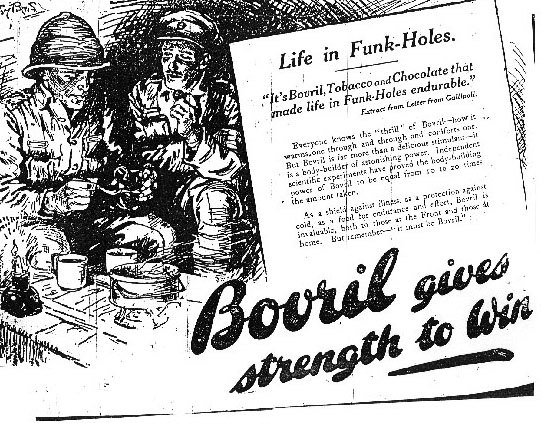
Thomas Hardy's "The Oxen" was first published on Christmas Eve, 1915. It was printed in the Times of London, cheek by jowl with news of the horrific conflict that was ravaging Europe; nearby was the advertisement shown below, touting Bovril as the tonic for men in the trenches. The second line refers to the folk belief that farm animals kneel at midnight on Christmas Eve. I have always loved the understatement of this poem, which seems even more poignant in a time when "holiday mix" blares from the speakers in every mall (and war is still ravaging).
Christmas Eve, and twelve of the clock.
"Now they are all on their knees,"
An elder said as we sat in a flock
By the embers in hearthside ease.
We pictured the meek mild creatures where
They dwelt in their strawy pen,
Nor did it occur to one of us there
To doubt they were kneeling then.
So fair a fancy few would weave
In these years! Yet, I feel,
If someone said on Christmas Eve,
"Come; see the oxen kneel,
"In the lonely barton by yonder coomb
Our childhood used to know,"
I should go with him in the gloom,
There's an interesting article at The Victorian Web about the poem and its context (including the ad, with its "sacramental" portrayal of Bovril).
Subscribe to:
Posts (Atom)